HPD Special Issue on the Community Development Block Grant Program Call for Abstracts

Given that 2014 is the 40th anniversary of the CDBG program, this is an opportune time to both take stock of the program’s evolution, accomplishments, shortcomings, and potential and propose program changes to better address the needs of low- and moderate-income communities in the 21st century. To facilitate this endeavor, Housing Policy Debate is organizing a special issue on the CDBG program at 40 to be guest edited by Bill Rohe of University of North Carolina at Chapel Hill and George Galster of Wayne State University.

The guest editors are soliciting abstracts of papers on any aspect of the CDBG program. The abstracts will be reviewed by the guest editors, who will invite selected proposers to develop full papers, which will then be submitted to Housing Policy Debate’s normal peer review process. The following is a list of possible topics, although abstracts on other CDBG topics are also welcome:

  • How well is the CDBG program targeted to the communities with the greatest need for revitalization, and how could that targeting be improved by changing the allocation formula?
  • How are funds allocated at the local level? Is it being done fairly? To what extent is it top-down or bottom-up? What factors influence the degree of citizen engagement? What creative models of citizen engagement have been effected?
  • What factors determine the degree to which CDBG spending leads to sustainable neighborhood improvements? How important is targeting? How important is the choice of neighborhoods? To what extent are communities adopting a triage perspective?
  • What role do national and/or local politics play in the allocation and use of CDBG funds?
  • To what extent are CDBG expenditures consistent with local consolidated plans?
  • To what extent are CDBG investments used to leverage other investments?
  • For what purposes has the Section 108 provision of the CDBG program been used, and how successful have those investments been?
  • What are the major lessons that can be drawn from 40 years of experience with the CDBG program?
  • Given the broad range of activities supported with CDBG funds, how can program impacts be measured?
  • What can be done to increase the capacities of local jurisdictions to use CDBG funds effectively?
  • How has the CDBG program been used to pursue local economic development effectively?
  • Is there any evidence that CDBG funds are substituted for local funds?
  • To what extent do recipients recycle CDBG funds? What impacts the degree of recycling?
  • How important has the CDBG program been in supporting community development corporations and other local nonprofit organizations? How have these sub recipients used the pass-through funds?

Papers may rely on literature reviews, qualitative studies, and/or quantitative analysis. Please submit a blinded and an unblinded version of your abstract to housingpolicydebate@gmail.com by January 31, 2013.
HPD Call for Abstracts

Posted in HPD | Tagged | Leave a comment

Equity Caucus at Transportation for America

On October 25th, Tom Sanchez, professor of Urban Affairs and Planning, participated on a panel on federal policy for transportation equity.  The event was held at the Pew Charitable Trust in Washington, DC and sponsored by PolicyLink and Transportation for America.

The program included:

Keynote Address
Honorable James Oberstar
Former Chair of the House Transportation and Infrastructure Committee
Introduction by James Corless, Transportation for America

Trends and Policy Ideas from the Field of Transportation Research
Brian Taylor, University of California Los Angeles
Samuel Staley, Florida State University
Thomas Sanchez, Virginia Tech
Robert Bullard, Texas Southern University
Anita Hairston, PolicyLink (moderator)

Perspectives on the Political Landscape and Opportunities for Advancing Economic and Social Equity in Federal Transportation Policy
Kerry O’Hare, Building America’s Future
Joshua Schank, Eno Center for Transportation
Amy Scarton, US Department of Transportation
Robert Puentes, Brookings Institution
James Corless, Transportation for America (moderator)

Transportation Equity at the Local Level: Challenges & Opportunities
Jacky Grimshaw, Center for Neighborhood Technology
Beverly Ward, Community Transportation Association of America
Carmen Rojas, Living Cities
Anita Hairston, PolicyLink (moderator)

Posted in transportation equity | Leave a comment

Academic Visibility for Urban Planning and the Webometric Future

Draft paper for presentation at the 53rd Annual ACSP Conference, Cincinnati, OH. (Click here for paper).

Abstract

This paper argues that the traditional emphasis of scholarly communications, citation analysis, and faculty evaluation, limited to books, book chapters, and journal articles is out-moded and fails to capture a significant share of scholarly activity that is now being posted online.  Planning academics, as social scientists, should value the extended range of dissemination provided by the web, and should also leverage its inherent functionality to evaluate scholarship.  Scholarly output is further characterized relative to productivity, visibility, reputation, and impact for the purposes of a new evaluation paradigm.  An example shows that both individual and faculty metrics can be used as a meaningful element of scholarly assessment. The implications of this approach touch on issues of scholarly communications and the promotion and tenure process.

Posted in academic visibility | Leave a comment

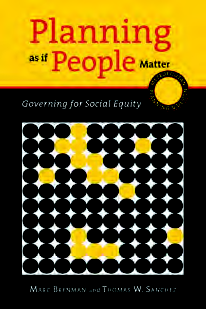
Planning as if People Matter: Governing for Social Equity

Planning as if People Matter: Governing for Social Equity

Marc Brenman and Thomas W. Sanchez
224 pages | 24 photos and figures | 6 x 9
Metropolitan Planning + Design

American communities are changing fast: ethnic minority populations are growing, home ownership is falling, the number of people per household is going up, and salaries are going down. According to Marc Brenman and Thomas W. Sanchez, the planning field is largely unprepared for these fundamental shifts. If planners are going to adequately serve residents of diverse ages, races, and income levels, they need to address basic issues of equity. Planning as if People Matter offers practical solutions to make our communities more livable and more equitable for all residents.

https://vimeo.com/50382894
http://islandpress.org/ip/books/book/islandpress/P/bo8070588.html
http://www.amazon.com/Planning-People-Matter-Governing-Metropolitan/dp/1610910125/

Posted in publications | Leave a comment

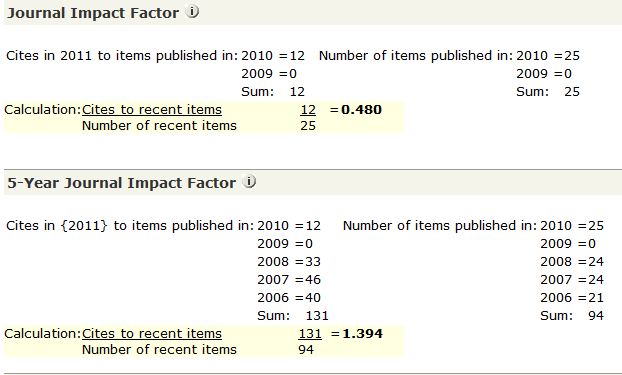
2011 Journal Citation Reports Released

Housing Policy Debate‘s Impact Factor dropped in the latest release of Thomson Reuters JCR.  Most of this was due to the fact that HPD was not published in 2009, therefore, no articles could be cited.  This effects both the 2 and 5-year factors.

HPD JCR

Posted in HPD | Leave a comment

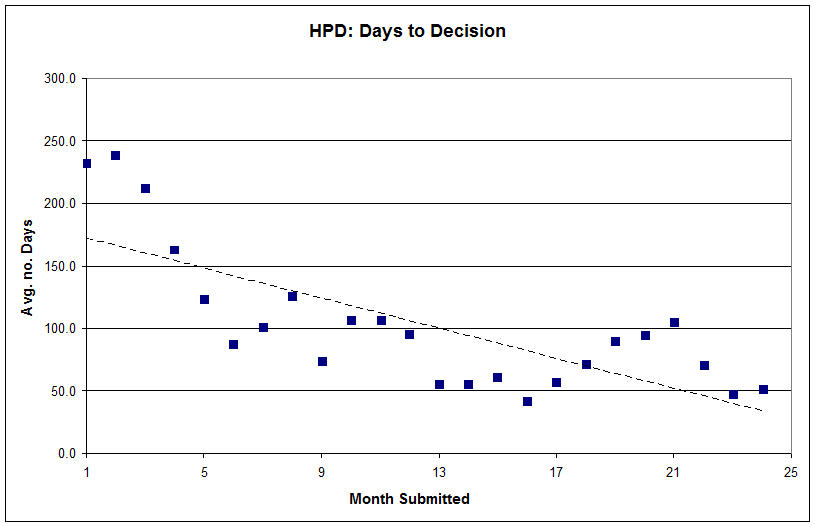
Housing Policy Debate reduces turnaround time for authors from over 200 days to under 100 days in the past 2 years.

ImageDuring the past two years, Housing Policy Debate has reduced the decision time to authors from an average of over 200 days to an average of under 100 days.  This is an important issue for scholars submitting their work to HPD as well as readers who wish to see the most up-to-date housing research.  Data from the on-line submission system are shown in the figure.

Posted in HPD | Tagged | Leave a comment

UCLA Complete Streets for California 2012 Conference

Equity Considerations: Complete Streets For Whom?

Tom Sanchez – Professor and Chair, Urban Affairs and Planning, Virginia Tech (PPT)

Sunyoung Yang – Senior Organizer and Researcher, Labor/Community Strategy Center, Bus Riders Union (PPT)

Jackie Douglas – Director, LivableStreets Alliance (PPT – forthcoming)

Transportation issues were integral to the civil rights movement, and today, equity in transportation policy continues to be a pressing civil and human rights issue. At a time of high unemployment and income inequality, transportation policy has the potential to expand economic opportunity for low-income Americans.  Complete streets efforts specifically can provide underrepresented workers with greater—and safer—access and mobility.  As policymakers discuss important issues such as how to prioritize investments in public transportation and infrastructure, these conversations should include the needs of communities of color, low-income people, seniors, people with disabilities, and other stakeholders. This panel will frame the role of complete streets in making cities just and will identify opportunities to do so, by involving communities that often are not included in transportation policy

Moderator: Tim Higgins – Associate Director, UCLA cityLAB

Posted in transportation equity | Tagged | Leave a comment

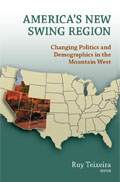
America’s New Swing Region

ImageThe Mountain West—Arizona, Colorado, Idaho, Nevada, New Mexico, and Utah—has become the new swing region in American politics. All signs point to these states, especially Colorado, Nevada and New Mexico, being crucial in the 2012 election. Unfortunately, the rise of this region has been underreported in the media, and many political observers have only the most superficial understanding of the profound economic, political, and social changes that continue to reshape the Mountain West. America’s New Swing Region is the remedy.

Contents:

  1. Introduction and Overview
  2. America’s New Swing Region: The Political Demography and Geography of the Mountain West
  3. Metropolitan Voting Patterns in the Mountain West: The New and Old Political Heartlands
  4. Hispanics, Race, and the Changing Political Landscape of the United States Mountain West
  5. The Political Attitudes of the Millennial Generation in the Mountain West
  6. The Mountain West Today: A Regional Survey
  7. Reapportionment and Redistricting in the Mountain West

Contributors include:

    • Karlyn Bowman, American Enterprise Institute;
    • David Damore, University of Nevada–Las Vegas (UNLV);
    • William Frey, Brookings Institution;
    • Scott Keeter, Pew Research Center;
    • Robert E. Lang, Brookings, UNLV, and the Lincy Institute;
    • Tom Sanchez, Virginia Tech University; and
    • Ruy Teixeira, Century Foundation and the Center for American Progress.
Posted in elections | Tagged | Leave a comment

Journal of Planning Literature

Journal of Planning Literature
John L. Renne, Thomas W. Sanchez, and Todd Litman
Carless and Special Needs Evacuation Planning: A Literature Review
Journal of Planning Literature November 2011 26: 420-431, first published on October 10, 2011 doi:10.1177/0885412211412315
Posted in articles, carless, evacuation, transportation | Tagged , , | Leave a comment

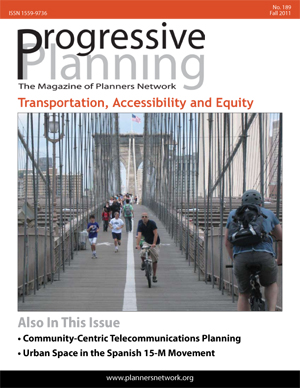
Progressive Planner

Fall 2011
Transportation, Accessibility and Equity

Feature ArProgressive Plannerticles

  • Public Transit’s Imperiled Future (153 KB)
    By Lisa Schweitzer
  • Getting There: Putting Accessibility into Practice for Progressive Transportation Planning
    By Jonathan Levine and Joe Grengs
  • What is Transportation Equity?
    By Tom Sanchez
  • Race, Class and Public Transit in the Motor City
    By Joel M. Batterman
  • Fruits, Veggies and Mass Cycling
    By Kevin J. Krizek
  • Liberalism, neoliberalism and Urban Transportation
    By Aaron Golub
  • Public Works, Public Networks: Community-Centric Telecommunications Planning (418 KB)
    By Greta Byrum and Benjamin Lennett
  • Foreclosures and the Federal Response
    By Neil Mayer
  • Christopher St. John and the Maine Center for Economic Policy
    By Pierre Clavel
  • Cuba Protects Private Housing, Not Capitalist Real Estate
    By Jill Hamberg
  • “This Square is our Home!”: The Organization of Urban Space in the Spanish 15-M Movement
    By Álvaro Sevilla-Buitrago
Posted in articles, transportation equity | Tagged | Leave a comment